How to Start A Cloud Kitchen in Dubai in 2026
TL;DR
- Cloud kitchens in Dubai (2026) are fully regulated food establishments, even without dine-in.
- You must secure both a correct commercial trade licence and Dubai Municipality food safety approval.
- Most operational kitchens require a mainland setup to serve Dubai customers.
- Kitchen layout approval, hygiene systems, and inspection readiness are mandatory before launch.
- Long-term success depends on delivery-focused design, operational efficiency, and compliance-first planning — not speed.
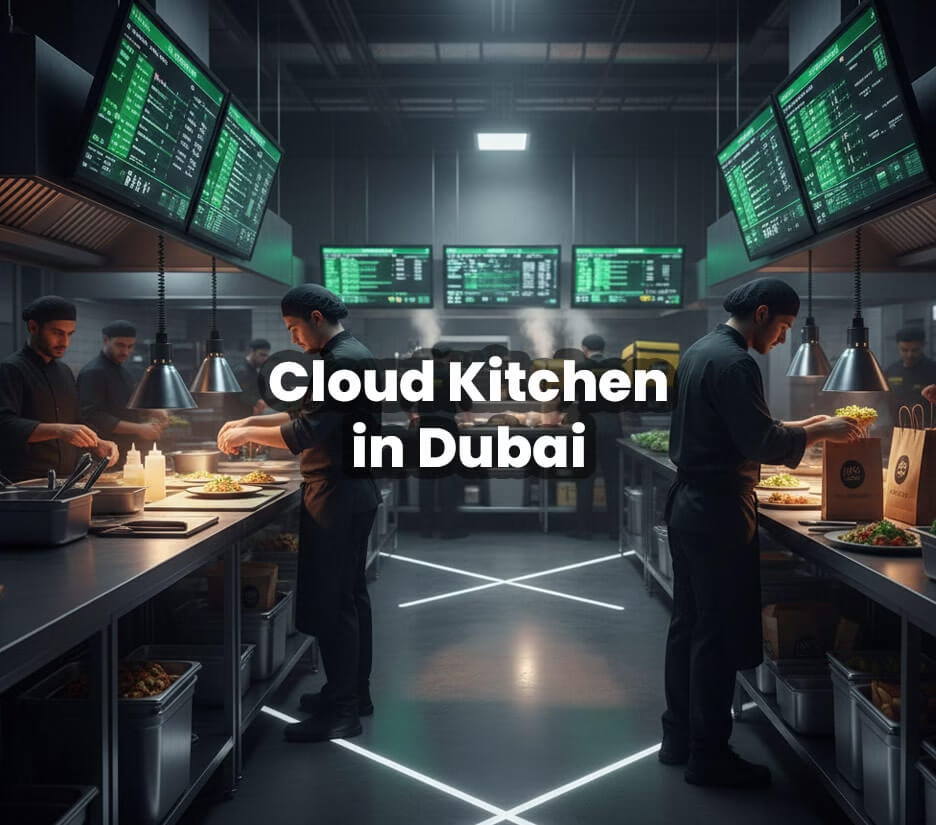
Cloud Kitchen in Dubai
Dubai’s food delivery market did not grow by accident. It grew because of lifestyle, logistics, and regulation working together. High smartphone penetration. Dense residential clusters. A population that orders food frequently. And a regulatory system that enforces food safety without ambiguity.
That last point is where many founders underestimate the process.
A cloud kitchen in Dubai is not a shortcut around regulation. It is a different operating model under the same food safety and licensing expectations as any other food establishment. The difference lies in how you structure your kitchen, menu, staffing, and delivery flow.
You might be interested in reading about:
What a Cloud Kitchen Really Means in Dubai
A cloud kitchen, sometimes called a ghost kitchen or virtual kitchen, is a food business that prepares meals exclusively for delivery or takeaway. There is no dine-in component. Customers place orders through delivery platforms, brand websites, or direct ordering systems.
In Dubai, however, the definition is less about marketing terms and more about how the kitchen operates.
From a regulatory perspective, a cloud kitchen is still a food establishment. That means it must comply with the same food safety framework applied to restaurants, cafeterias, and catering kitchens. The absence of seating does not reduce regulatory responsibility.
Cloud Kitchen Models
In practice, cloud kitchens in Dubai usually operate under one of three models:
A. Single Brand Cloud Kitchen
The first is a single-brand cloud kitchen. One concept. One menu. One kitchen. This model is common for founders testing a focused idea or for established restaurants launching a delivery-only brand.
B. Multi-Brand Cloud Kitchen
The second is a multi-brand cloud kitchen. Multiple virtual brands operate from the same approved kitchen. Each brand may have its own menu, packaging, and delivery listings, but food preparation happens within a shared facility. This model is popular in Dubai because it maximises kitchen utilisation and allows founders to test new concepts without opening new locations.
C. Shared or Rented Cloud Kitchen
The third is a shared or rented kitchen model. Here, you operate within a facility that already holds municipality approval. You rent a defined kitchen area or time slots. While this can reduce setup time, compliance responsibilities do not disappear. You are still accountable for food safety, staff training, and operational discipline.
What matters most is not the label you use, but whether your setup meets Dubai Municipality’s requirements for food establishments.
The 2026 Vision for Cloud Kitchen in Dubai
The cloud kitchen space in Dubai has moved past the experimental stage. It is now regulated, competitive, and professionalised.
This creates opportunity and pressure at the same time.
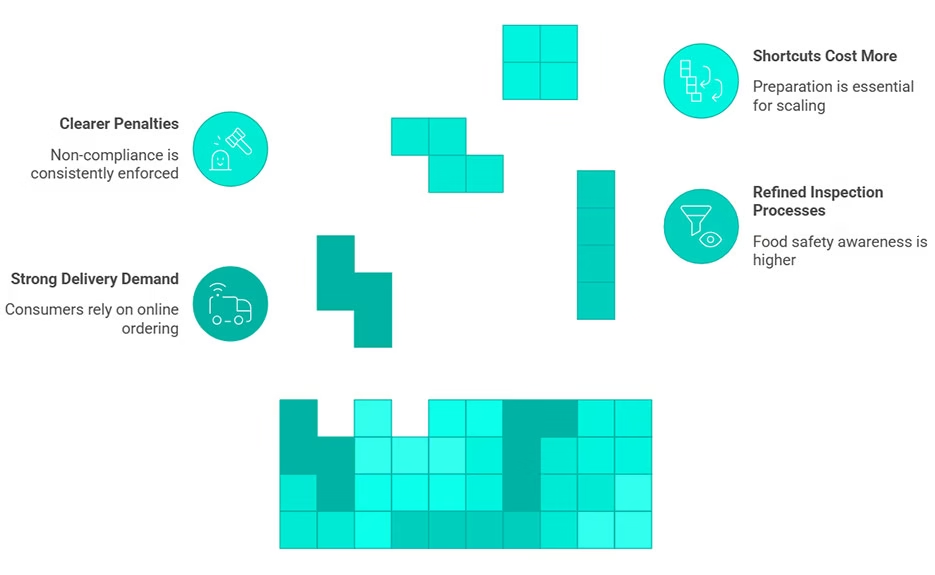
On one hand, delivery demand remains strong. Consumers are comfortable ordering online. Office workers, families, tourists, and late-night customers all rely on food delivery as a default option.
On the other hand, regulators have refined inspection processes. Food safety awareness is higher. Kitchen inspections are more detailed. Penalties for non-compliance are clearer and more consistently enforced.
For founders in 2026, this means one thing. Shortcuts cost more than preparation.
Businesses that design their kitchens properly, train staff early, and align licensing with operations tend to scale smoothly. Those who treat compliance as paperwork often face delays, rejections, or forced redesigns.
The Legal Framework for Cloud Kitchens in Dubai
Starting a cloud kitchen in Dubai means operating within a clearly defined regulatory environment. While the process is structured, it is not complicated when approached correctly. The key is understanding that a cloud kitchen is regulated like any other food establishment, even without dine-in service.
In Dubai, cloud kitchens are governed through two parallel compliance tracks. Both must be addressed together from the beginning. The two-track compliance system
A cloud kitchen must comply with:
- Commercial licensing, which legally registers your business and permits you to operate
- Food establishment and food safety compliance, which regulates how your kitchen is designed, operated, and inspected
These tracks run in parallel. Securing one does not override the requirements of the other.
A. Commercial Licensing: What it Covers
Commercial licensing establishes your business on paper. It is issued through Dubai’s economic licensing framework and determines what your company is legally allowed to do. At this stage, authorities review:
- Your chosen business activity (this must explicitly allow food preparation)
- Your legal structure
- Shareholder and manager details
- Whether your activity aligns with food establishment regulations
Selecting the correct activity is critical. A mismatch between your licence activity and your actual operations is one of the most common causes of delays during food establishment approval.
B. Food Establishment and Safety Compliance
Dubai Municipality oversees food safety compliance and applies to all food businesses, including delivery-only kitchens. When assessing a cloud kitchen, inspectors typically evaluate:
- Kitchen layout and workflow logic
- Separation of raw and cooked food areas
- Storage conditions and temperature control
- Cleaning and sanitation systems
- Waste disposal and pest control measures
- Staff hygiene practices and food handling procedures
These two systems are connected, but not interchangeable.
A valid trade licence does not mean your kitchen can operate. Likewise, a compliant kitchen cannot operate without the correct commercial licence.
The absence of dine-in seating does not reduce scrutiny. In many cases, cloud kitchens are reviewed more carefully because of their high-volume, delivery-driven operations.
Mainland vs Free Zone
One of the most common questions founders ask is whether a cloud kitchen can be set up in a Free Zone. The answer depends on what you are actually doing.
If you are preparing food and selling it to customers in Dubai through delivery platforms, you are operating a food establishment. In most cases, this points toward a mainland company setup, because food establishment approvals, inspections, and delivery operations are tied to local municipal jurisdiction. Free Zones may be suitable for:
- Food tech platforms
- Brand holding companies
- Marketing or franchise management entities
They are generally not suitable for operating kitchens that cook and dispatch food across Dubai unless specific approvals and operational structures are in place.
For most founders who want to sell food to end customers, mainland licensing combined with municipality food establishment approval is the most direct and compliant route.
Licences and Approvals Required for a Cloud Kitchen
A cloud kitchen setup involves multiple approvals that must align. First, you need a trade licence with the correct food-related activity. Choosing the wrong activity can delay or block municipality approvals later. Second, you must obtain food establishment approval from Dubai Municipality. This is not a single document, but a process that includes:
- Kitchen layout review
- Equipment placement evaluation
- Hygiene and workflow assessment
- Waste management planning
- Inspection readiness
Third, the kitchen location itself must be suitable. Whether you rent or build, the space must be capable of passing inspection based on food safety standards. Additional approvals may apply depending on:
- The type of food you prepare
- Volume and complexity of operations
- Whether you handle raw proteins, baking, or large-scale prep
The key point is sequencing. Licences and approvals must be applied for in the correct order, with the right documentation at each stage.
Step-By-Step: How to Start a Cloud Kitchen in Dubai
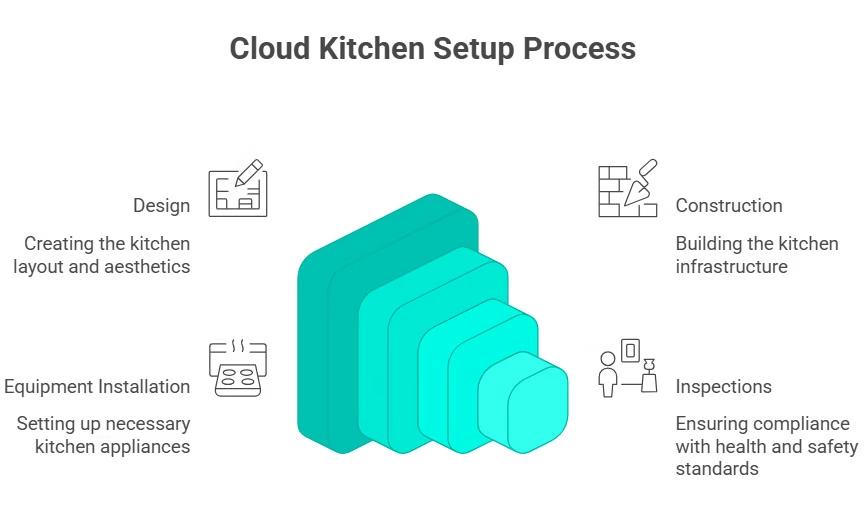
Starting a cloud kitchen works best when followed in the correct sequence. Skipping steps or changing the order often leads to delays, redesign costs, or inspection failures.
Step 1: Define your cloud kitchen model and menu strategy
Before licensing begins, you must be clear on how your kitchen will operate. This includes whether you are launching a single brand or multiple brands, and how complex your menu will be.
In Dubai, delivery performance matters more than creativity alone. Menus that rely on fast assembly, consistent portioning, and limited cooking stages tend to perform better and pass inspections more smoothly. Early menu decisions also affect:
- Equipment selection
- Kitchen layout
- Staffing requirements
- Food safety controls
Step 2: Decide whether to rent or build a kitchen
You can either rent space in an already approved facility or build your own kitchen from scratch. Renting an existing kitchen often reduces time to market, but you still need to ensure:
- Your specific operation fits within the approved layout
- Shared facilities meet your food safety needs
- Your brand is clearly segregated operationally
Building your own kitchen offers full control, but requires careful planning and municipality approval at every stage.
Step 3: Select the correct business activity and licence
Your trade licence must clearly allow food preparation and cloud kitchen operations. This is where many founders make early mistakes. Activity selection impacts:
- Municipality approval eligibility
- Inspection scope
- Future expansion options
This step should always be aligned with how your kitchen will operate in reality, not how you imagine it might evolve later.
Step 4: Secure a compliant kitchen location
Not every commercial space can be converted into a kitchen. Dubai Municipality evaluates:
- Zoning suitability
- Ventilation feasibility
- Waste management access
- Drainage and water connections
A location that looks ideal commercially may fail inspection if it cannot meet food safety infrastructure requirements.
Step 5: Prepare and submit the kitchen layout for approval
Layout approval is one of the most critical stages. Authorities review how food moves through your kitchen, from delivery to storage, preparation, cooking, packing, and dispatch. The goal is to minimise contamination risk and ensure efficient, hygienic workflow. Layout approval must be obtained before fit-out begins.
Step 6: Complete fit-out and equipment installation
Once the layout is approved, fit-out can begin. Equipment must match what was submitted in the approved layout. Changes made during fit-out without approval can lead to inspection failure and rework.
Step 7: Hire staff and implement food safety systems
Staff must be trained in food handling, hygiene, and kitchen procedures before inspection. Authorities expect to see:
- Clean uniforms and PPE
- Documented cleaning schedules
- Temperature monitoring systems
- Clear role assignments
Food safety is not theoretical. Inspectors look for evidence that systems are in daily use.
Step 8: Final inspection and approvals
Dubai Municipality conducts a final inspection to verify that:
- The kitchen matches the approved layout
- Equipment is installed correctly
- Hygiene systems are operational
- Staff understand procedures
Only after passing inspection can operations begin.
Step 9: Onboard delivery platforms and soft launch
Once approved, you can onboard platforms, finalise packaging, and test operations with a controlled launch. This phase helps identify timing issues, packaging weaknesses, and menu bottlenecks before scaling.
Kitchen Design, Layout Approval, and Fit-Out Realities
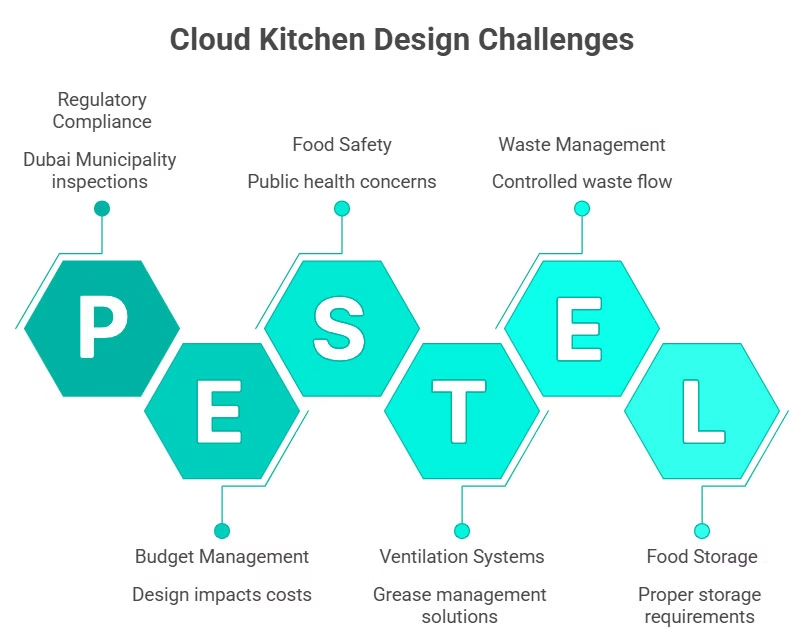
Kitchen design is where many cloud kitchen budgets collapse. Dubai Municipality focuses on process flow, not aesthetics. Inspectors want to see logic, separation, and control. Key design principles include:
- Clear separation between raw and cooked food areas
- Dedicated handwashing and sanitation points
- Proper cold, frozen, and dry storage
- Controlled waste flow away from food prep areas
- Adequate ventilation and grease management
Designing with inspections in mind reduces rework and speeds up approvals.
Cost of Starting a Cloud Kitchen in Dubai (2026)
Costs vary significantly based on your choices, but understanding the drivers helps you budget realistically.
One-time setup costs typically include:
- Trade licence and approvals
- Kitchen layout design and approval
- Fit-out and equipment
- Initial inventory and packaging
- Technology systems (POS, order management)
Monthly operating costs often include:
- Rent or kitchen usage fees
- Staff salaries
- Utilities
- Delivery platform commissions
- Packaging and consumables
- Marketing and promotions
What affects your total cost most:
- Renting vs building your own kitchen
- Number of brands operated from one kitchen
- Menu complexity
- Operating hours
- Delivery platform dependency
Cloud kitchens can be more cost-efficient than restaurants, but only when designed for delivery efficiency from the start.
Operations that Determine Long-Term Success
The strongest cloud kitchens succeed because of systems, not hype. Operational focus areas include:
- Menu engineering for delivery durability
- Packaging that maintains temperature and presentation
- Prep timing and batching efficiency
- Order accuracy and consistency
- Customer feedback loops
Food safety must be embedded into daily operations, not treated as a compliance task. Clean logs, temperature records, and staff discipline reduce inspection risk and build operational resilience
Staffing, Visas, and Compliance Culture
Cloud kitchens often run lean teams, but each role matters. Typical roles include:
- Head or supervising chef
- Prep and line cooks
- Packing and dispatch staff
- Kitchen supervisor
Staff must be trained not only in cooking, but also in hygiene, cross-contamination prevention, and delivery handling. A strong compliance culture reduces staff turnover, inspection stress, and operational disruption.
How EZONE Can Help You Start Your Cloud Kitchen Business in Dubai
Starting a cloud kitchen in Dubai in 2026 is not about moving fast. It is about moving correctly. The regulatory framework is clear. Expectations are defined. When licensing, kitchen design, and operations are aligned from the start, cloud kitchens can scale efficiently and sustainably.
At EZONE, we support founders through the entire process. From selecting the correct licence activity to coordinating municipality approvals, kitchen readiness, and post-licensing support. Every step is handled with clarity, accuracy, and long-term planning in mind.
If you are planning to establish a cloud kitchen in Dubai or reassessing an existing setup, a structured consultation can help you avoid delays, redesign costs, and compliance risk.
Speak to EZONE’s business setup specialists to get a clear, tailored roadmap for starting your cloud kitchen in Dubai.
Starting right sets the foundation for everything that follows.
FAQs About Cloud Kitchens in Dubai