The Rise of Green Businesses in Dubai Free Zone
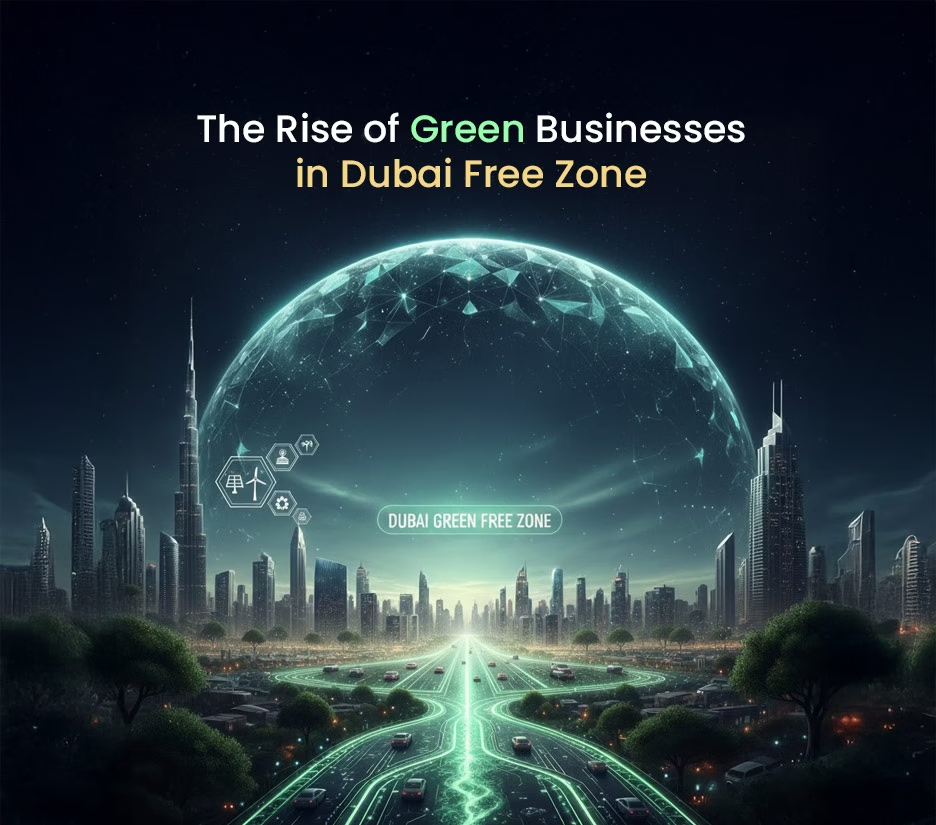
The rise of green businesses in Dubai Free Zone isn’t just a trend; it’s a sign of how the city’s entrepreneurs are rethinking success. Across the world, businesses are realizing that growth and sustainability don’t have to be opposites, and in Dubai, that idea has turned into a real movement.
Free Zones, once known mainly for tax breaks and quick licensing, are now becoming spaces for green innovation, where sustainability and profitability work hand in hand. From renewable energy startups to eco-conscious fashion brands, a new wave of founders is transforming Dubai’s environmental goals into thriving business ventures.
Because in Dubai, going green isn’t just good ethics, it’s smart business.
Why Green Businesses Are Thriving in Dubai
Sustainability is no longer a niche idea. It’s an economic strategy and Dubai is leading that shift in the region. Several forces are fueling the rise of green businesses in the UAE, and most of them come down to policy, demand, and vision.
National Vision and Commitment
Dubai’s green business momentum starts with government direction.
The UAE Net Zero by 2050 and Dubai Clean Energy Strategy 2050 anchor the country’s move toward carbon neutrality, renewable power, and circular economies.
These aren’t distant targets. The UAE already sources over 15% of its energy from renewables and is investing billions more in clean infrastructure, waste management, and green finance. Every Free Zone, from Meydan to DMCC, has been asked to align with these national sustainability frameworks, making green business not just encouraged, but expected.
Global Market Demand for Sustainable Solutions
Across industries, sustainability has become a global buying factor. Investors prefer companies with ESG goals. Consumers pay more for ethical products. Corporations seek green-certified suppliers.
For entrepreneurs, that means the market is already shifting toward sustainability-led innovation from clean logistics to ethical tech. Dubai’s trade network and Free Zones make it the perfect launch pad for these businesses, offering both global access and local credibility.
Strong Policy Backbone and Green Incentives
The UAE’s federal and emirate-level policies are driving business reforms that make sustainability more attainable. Some of the major initiatives include:
- Dubai Green Fund – providing financing for renewable and energy-efficiency projects
- Green Economy Initiative – integrating sustainability across public-private partnerships.
- Emirates Green Building Council – promoting energy-efficient construction standards.
- Sustainability-linked loans and green sukuk – attracting investors who want measurable environmental impact.
Together, these policies make it easier and cheaper to start a green venture in a Free Zone than ever before.
The Private Sector Is Catching Up
The biggest proof that Dubai’s green transition is real?
Private companies are moving just as fast as policymakers.
From DEWA’s solar expansion to Majid Al Futtaim’s carbon-neutrality goals, corporations are embedding sustainability into their core strategy. This ripple effect drives demand for green suppliers, consultants, and innovators, the exact businesses thriving inside Dubai’s Free Zones.
Green Infrastructure Is Already in Place
Unlike many emerging markets that talk about sustainability, Dubai has built the backbone for it. Solar parks, green-certified buildings, EV-ready roads, recycling zones, and digital licensing systems make sustainability scalable, not symbolic.
Free Zones such as Meydan Free Zone and Dubai Silicon Oasis have introduced digital-first platforms that reduce paper use, carbon emissions, and administrative waste. This foundation attracts startups that want to integrate sustainability without the heavy infrastructure lift.
The Green Golden Visa: Attracting Global Sustainability Talent
Dubai’s sustainability push isn’t just about companies, it’s about people driving them.
To attract innovators, researchers, and investors building the green economy, the UAE introduced the Green Golden Visa.
This 10-year renewable residency targets professionals, entrepreneurs, and investors working in sectors such as renewable energy, sustainable agriculture, waste management, and environmental technology. It also allows visa holders to sponsor family members and own 100 percent of their businesses, complementing the flexibility already offered by Dubai Free Zones.
For founders setting up in Free Zones, it means relocation, hiring, and long-term scaling are simpler, and talent retention becomes a competitive advantage.
Why Free Zones Are the Launchpads for Green Growth
Free Zones have always been where Dubai tests the future.
In the 2000s, they powered international trade.
In the 2010s, they became tech and innovation clusters.
Now, in 2025 and beyond, they are the front lines of the city’s sustainability transformation.
Free Zones are no longer just business hubs; they’re green laboratories where innovation, investment, and environmental strategy merge.
Flexible Regulation that Encourages Innovation
One of the strongest advantages of a Free Zone business setup in Dubai is the freedom to experiment. Startups developing solar technologies, smart waste systems, or low-carbon manufacturing solutions can test new ideas with fewer bureaucratic hurdles.
Authorities in Meydan, DMCC, and IFZA are adapting their licensing models to accommodate sustainable business models from green logistics to renewable energy consultancies.
This flexibility helps founders move faster from prototype to proof of concept, a critical advantage in emerging sustainability sectors.
Built for Sustainability from the Ground Up
Dubai’s Free Zones are designed with sustainability woven into their physical and digital fabric. Smart energy grids, recycling systems, and paperless government portals reduce emissions and waste by design. A few standout examples:
- Meydan Free Zone digitized 100% of company setup and renewal processes, eliminating the need for paper documentation and physical office visits.
- DMCC has implemented energy-efficient systems and waste-management initiatives throughout its Jumeirah Lakes Towers community.
- Dubai Silicon Oasis has integrated LEED-certified green buildings and solar installations into its urban plan.
- Masdar City continues to serve as the UAE’s model for carbon-neutral design and innovation.
These aren’t symbolic measures; they set operational standards for how sustainable companies can run efficiently from day one.
Access to Green Finance and Incentive Programs
Green ventures often need capital before traction. Dubai’s Free Zones act as gateways to sustainability-linked funding programs that support these early-stage projects. Entrepreneurs can tap into:
- The Dubai Green Fund, which supports renewable energy and eco-efficient technologies.
- ESG-linked loan programs are offered by local banks for qualifying companies.
- Fee rebates and incentives within certain Free Zones for energy-efficient facilities or sustainability reporting.
By combining these programs with digital setup speed and full foreign ownership, Free Zones remove traditional barriers to launching an impact-driven business.
Strategic Location and Global Visibility
Dubai sits at the crossroads of global trade. For green companies, from climate-tech startups to carbon traders, this means access to diverse markets across the Middle East, Africa, and Asia with unmatched logistics efficiency.
Operating from a Free Zone allows companies to reach international clients without dealing with complex trade restrictions. It also sends a clear message to investors: the company operates in a trusted, regulated, and sustainability-aligned jurisdiction.
A Community of Like-Minded Innovators
Every Free Zone cultivates its own ecosystem, and these ecosystems are now turning green.
At IFZA, startups focused on renewable materials collaborate with firms offering ESG consultancy. At DMCC, green commodity traders interact with carbon-credit initiatives and clean-tech developers. At Meydan, digital-first founders integrate sustainability metrics directly into their business models.
This clustering effect accelerates innovation and partnership opportunities. Businesses learn faster, share suppliers, and co-develop solutions all within the same network.
Compliance Made Easier
Sustainability reporting and compliance can feel complex.
Free Zones simplify it by aligning their regulatory frameworks with the UAE’s Green Agenda 2030 and ESG reporting standards.
This alignment means that founders can meet local and international environmental benchmarks from the start, reducing the friction that often slows down eco-conscious businesses in other regions.
Gateway to Mainland Collaboration
New reforms are also bridging the gap between Free Zones and mainland markets.
Under recent updates from Dubai Economy and Tourism (DET), certain Free Zone entities can now extend operations to mainland clients without needing a separate trade license if their activities meet sustainability criteria.
That opens enormous potential for B2B collaboration, especially for green service providers like energy consultants, waste solution developers, and ESG auditors.
Inside the Free Zones Leading the Change
Here are five Free Zones in Dubai that stand out for their sustainability efforts and are especially relevant for green-business founders:
1. DMCC Is Defining What Sustainable Trade Looks Like
The Dubai Multi Commodities Centre (DMCC) has evolved from a commodities hub into a sustainability pioneer.
- Its Sustainability Hub, launched in March 2024, connects 24 000 + companies with ESG resources, events, and advisory programs.
- DMCC’s 2023 Sustainability Report outlines targets for reduced energy use and inclusive trade practices.
- It supports responsible sourcing, carbon-credit pilots, and waste-management solutions across member firms.
DMCC is ideal for businesses involved in green commodities, sustainable logistics, and carbon-credit trading.
2. Meydan Free Zone Is Setting the Standard for Paperless, Sustainable Setup
Meydan Free Zone combines digital innovation with environmental responsibility.
- It has fully digitized company formation and licensing, cutting paper consumption by 80 percent.
- Its “Grow from Dubai” and “Dubai 24×7” initiatives focus on remote operations, e-signatures, and renewable-ready facilities.
- Partnerships such as its 2024 agreement with Abu Dhabi Islamic Bank (ADIB) promote SME financing aligned with green-economy goals.
For eco-SMEs and startups seeking fast, tech-driven sustainability integration, Meydan offers one of the most forward-thinking environments.
3. IFZA Empowers Agile Green Startups to Scale Quickly
The International Free Zone Authority (IFZA) attracts early-stage founders building sustainability-focused ventures.
- It provides flexible packages, digital onboarding, and low-cost licensing ideal for testing new green-tech or eco-service models.
- IFZA’s sector clusters include renewable consulting, recycling innovation, and ESG advisory.
- Through partnerships with local accelerators, IFZA links startups to mentorship and funding.
It’s a prime launchpad for entrepreneurs who want to validate a green idea before scaling to larger markets.
4. Dubai Silicon Oasis Blends Smart Tech With Green Design
Dubai Silicon Oasis (DSO) merges innovation, sustainability, and community.
- Its LEED-certified smart buildings and renewable-energy systems showcase Dubai’s “smart city” blueprint.
- DSO hosts clean-tech R&D firms, IoT energy-efficiency startups, and digital-sustainability labs.
- The zone’s infrastructure supports electric-vehicle charging, solar integration, and efficient district cooling.
For tech-centric sustainability startups, from AI energy monitoring to circular manufacturing, DSO offers both credibility and collaboration.
The Green Business Advantage
Going green in Dubai Free Zones isn’t just good for the planet; it’s good for profit. Businesses that adopt sustainable practices gain faster growth, better funding access, and long-term brand trust. Here’s why the green shift makes business sense.
Sustainability Now Comes With Tax and Financial Advantages
Dubai Free Zones continue to offer 0% corporate tax for qualifying income, and that advantage extends to green ventures.
- Companies structured as Qualifying Free Zone Persons (QFZP) can enjoy tax exemptions if their income aligns with approved economic activities, several of which include renewable energy, environmental consultancy, and green infrastructure projects.
- Financial institutions are prioritizing green finance and sustainability-linked loans, offering lower interest rates to businesses with measurable ESG performance.
- The Dubai Green Fund provides financing for projects in clean energy, water efficiency, and low-carbon transport.
This means a sustainable business model in a Free Zone doesn’t just reduce emissions, it reduces costs.
Access to Green Capital and Investors Is Expanding
Investors are now screening companies through an ESG lens. Those with verified sustainability commitments attract stronger capital and higher valuations.
- Green sukuk (Islamic green bonds) and sustainability-linked financing have grown rapidly across the UAE’s financial ecosystem.
- Nasdaq Dubai and DIFC are launching sustainability indices to track companies with measurable environmental outcomes.
- Free Zones such as DMCC and Meydan now connect their members directly with sustainability-focused investors, accelerators, and grants.
In short, building a green business in a Dubai Free Zone puts you where capital is already flowing.
Green Businesses Gain Global Credibility and Brand Value
Today’s consumers and corporate buyers reward brands that act responsibly. Operating within a Dubai Free Zone where environmental standards are audited and sustainability frameworks are publicly disclosed gives your business an instant credibility boost.
- Green-certified companies often enjoy 20–30% higher brand trust in B2B procurement.
- Businesses aligned with the UAE Green Agenda 2030 gain access to government-backed sustainability showcases, trade expos, and global media visibility.
- A Free Zone license allows you to display compliance seals and certifications recognized across international markets.
That visibility translates directly into partnerships and sales.
Long-Term Cost Savings Through Efficiency
Sustainability often starts as a moral decision but ends up as a financial one. Energy efficiency, smart buildings, and digital workflows reduce operational waste, and Free Zones have built these systems in by design.
- Renewable-powered facilities lower utility costs.
- Digital processes cut paperwork and labor overhead.
- Waste segregation and water recycling initiatives reduce recurring charges.
A founder operating sustainably isn’t spending more; they’re spending smarter.
Alignment With Global ESG and Net-Zero Frameworks
Sustainability is increasingly a compliance requirement for international trade.
By setting up in a Dubai Free Zone, companies can align with global frameworks like:
- UN Sustainable Development Goals (SDGs)
- Global Reporting Initiative (GRI)
- Task Force on Climate-Related Financial Disclosures (TCFD)
This alignment isn’t just symbolic; it future-proofs companies for global partnerships and export readiness.
Brand Positioning That Commands Trust
In 2025, sustainability isn’t a differentiator; it’s an expectation. A green business license in Dubai Free Zones signals that your company stands for transparency, innovation, and environmental responsibility. That brand positioning doesn’t just win customers, it wins loyalty.
The Green Dividend
| Advantage | What It Means for Businesses |
|---|---|
| Tax Incentives | 0% tax for qualifying sustainable income under QFZP rules |
| Green Finance Access | Easier access to loans, grants, and ESG-linked funds |
| Investor Appeal | Higher valuations for ESG-compliant startups |
| Brand Value | Enhanced trust, visibility, and long-term loyalty |
| Operational Savings | Lower costs through energy and resource efficiency |
| Global Readiness | Compliance with international ESG standards |
How to Set Up a Green Business in a Dubai Free Zone
Starting a green business in Dubai isn’t complex, but doing it right takes clarity, compliance, and smart planning. Here’s a simple, step-by-step guide to help founders, investors, and sustainability-focused entrepreneurs build efficiently inside a Free Zone.
Step 1: Define Your Green Business Model
Before registration, clarify what “green” means in your business. Are you providing a sustainability service, manufacturing eco-friendly products, or integrating renewable operations?
Dubai classifies green businesses under sectors such as:
- Renewable energy and clean technology
- Environmental consultancy and waste management
- Sustainable construction and materials
- Carbon trading and energy efficiency services
- Circular economy and recycling ventures
Having a clear scope ensures your activity matches the correct licensing structure and qualifies for sustainability-linked incentives.
Step 2: Choose the Right Free Zone
Every Free Zone offers something different, from cost structures to community ecosystems.
| Free Zone | Best For | Sustainability Edge |
|---|---|---|
| DMCC | Green commodity trade, carbon credits, recycling tech | Sustainability Hub + ESG framework |
| Meydan Free Zone | SMEs, eco-digital startups, consultants | 100% digital, paperless setup |
| IFZA | Early-stage green ventures | Fast, low-cost licensing for testing |
| Dubai Silicon Oasis | Climate tech, AI, smart-energy startups | LEED-certified buildings + R&D support |
| Masdar City (comparative) | Renewable energy and manufacturing | Net-zero infrastructure |
When in doubt, choose a Free Zone that matches your sector focus and investor alignment, not just price. A smart location signals credibility both locally and internationally.
Step 3: Select the Right License Type
Free Zones issue various license categories. For green businesses, the most common are:
- Commercial License — for trading eco-friendly goods and sustainable materials.
- Service License — for environmental consultancy, auditing, or training.
- Industrial License — for manufacturing renewable or sustainable products.
Many zones also allow dual-activity licenses, letting you operate across both trade and service lines, ideal for green startups that combine product and consultancy offerings.
Want to know how a dual license can boost your flexibility and growth potential?
You might be interested in learning more about the benefits of having a dual license.
Step 4: Prepare the Required Documents
Most Free Zones simplify this to a few digital uploads:
- Passport copy and passport-size photo
- Business plan
- Proof of address (utility bill or tenancy contract)
For sustainability-related activities, some Free Zones may request:
- Environmental compliance statement
- ESG goals or project description
- Proof of technical expertise or certification
Having these documents ready accelerates approval time.
Step 5: Apply Through the Free Zone Portal
All major Free Zones now have fully digital registration systems. Applications, document submissions, and payments can all be completed online, often within just a few hours. Processing times:
- Initial name approval: 1–2 days
- License issuance: 3–5 days
- Visa and bank setup: 7–10 days
Some zones, like Meydan and IFZA, even offer instant digital licenses for low-risk activities, making it one of the fastest ways globally to launch a compliant green startup.
Not sure where to start? EZONE’s business setup advisors can walk you through the process, recommend the best Free Zone for your goals, and help you get your license without the stress.
Step 6: Open a Bank Account With ESG-Friendly Institutions
Banking partners in the UAE are now offering green business accounts. Look for options that align with your sustainability focus:
- Emirates NBD Green Account – prioritizes clients with sustainability-linked reporting.
- Mashreq Green Financing Solutions – tailored for renewable energy and eco SMEs.
- ADIB Sustainable SME Program – partnered with Meydan Free Zone for eco-startup financing.
These partnerships simplify fund transfers, loan access, and future ESG certifications.
Step 7: Apply for the Green Golden Visa (If Eligible)
If your business or role contributes directly to the UAE’s sustainability goals, apply for the Green Golden Visa. This 10-year renewable residency allows:
- 100% business ownership
- Family sponsorship
- Access to national green innovation programs
It’s a major advantage for founders and investors planning long-term operations.
Step 8: Comply With ESG Reporting and Certification
Sustainability isn’t a one-time label; it’s an ongoing commitment. After setup, maintain compliance through:
- Annual ESG or environmental impact reports
- Energy consumption audits
- Certifications such as ISO 14001, LEED, or B Corp
Many Free Zones offer workshops and consultations to help you meet these benchmarks easily
Step 9: Market Your Sustainability Story
Your sustainability efforts are a business advantage to showcase. Use transparent communication to share:
- Your energy-saving or waste-reduction achievements
- Community impact metrics
- Green certifications
Consumers, investors, and partners now expect authenticity. In Dubai’s green economy, sustainability storytelling isn’t self-promotion; it’s proof of purpose.
Building a Sustainable Brand That Lasts
Starting a green business is only the beginning. The real challenge and opportunity lies in how you build credibility, trust, and connection around it. A sustainable brand in Dubai Free Zones doesn’t just meet environmental goals; it communicates them clearly, proves them consistently, and scales them authentically. Here’s how to turn your green business into a lasting brand.
Start With Purpose, Not Positioning
The strongest green brands begin with purpose.
Ask: What environmental or social problem does my business genuinely solve?
That answer should sit at the heart of your brand story.
Whether it’s cutting emissions, designing sustainable products, or promoting ethical trade, purpose is what turns compliance into conviction. When your company’s purpose aligns with Dubai’s sustainability agenda, like Net Zero 2050 or Green Economy Strategy 2030, your brand becomes part of something bigger.
Build Transparency Into Everything
Greenwashing has made audiences skeptical. Transparency, not perfection, builds trust. Free Zone businesses should publish simple, honest updates about their impact:
- Annual energy savings or waste reduction metrics
- Details of sustainability certifications
- Participation in green initiatives or volunteer programs
Use your website, LinkedIn, or Free Zone partner platforms to share progress. Dubai consumers and investors value brands that measure what they claim.
Certify Credibility With Recognized Standards
In the sustainability space, third-party verification matters. Certifications validate your brand’s commitment and open doors to new markets. Top certifications to consider:
- ISO 14001 – Environmental Management Systems
- LEED – Green Building Certification
- B Corp Certification – Social and Environmental Performance
- CarbonNeutral® Certification – Carbon footprint offset verification
Many Free Zones, including DMCC and Meydan, offer assistance in connecting businesses to accredited ESG auditors and certification bodies.
Align Brand Messaging With Action
Your communication should always reflect what you’re actually doing. Avoid vague claims like “eco-friendly” or “sustainable.” Instead, be specific:
“We reduced paper use by 80%.”
“Our packaging is 100% recyclable.”
“We offset our annual carbon footprint through renewable credits.”
When marketing aligns with measurable action, authenticity follows naturally, and credibility becomes your brand currency.
Make Sustainability Part of the Customer Experience
Sustainability isn’t just a value, it’s an experience. Consumers in Dubai increasingly expect the businesses they support to reflect their values. Embed eco-consciousness into every customer touchpoint:
- Use digital receipts and paperless invoices.
- Offer recycling or take-back programs.
- Partner with green delivery services.
- Showcase sustainable product lines visibly online.
Each small act reinforces your message and builds emotional connection.
Engage Your Community and Employees
Your team is your first sustainability ambassador. Train employees to understand your environmental goals and involve them in green initiatives from waste segregation drives to CSR volunteering. Externally, collaborate with other businesses in your Free Zone. Joint workshops, green pop-ups, or clean-tech meetups not only raise awareness but also expand your network.
When people feel ownership in your mission, the brand grows organically.
Leverage Partnerships for Greater Impact
No green business operates in isolation. Form alliances with Free Zone sustainability programs, universities, or global organizations.
- Partner with the Dubai Carbon Centre of Excellence for emissions audits.
- Join the Emirates Green Building Council to learn best practices.
- Collaborate with Hub71 or Masdar City accelerators for innovation support.
These partnerships enhance credibility, visibility, and access to funding opportunities.
The Future of Green in Dubai: 2025–2030 Outlook
Dubai’s green economy isn’t a short-term campaign; it’s the backbone of its future economic model. Between 2025 and 2030, sustainability will evolve from a policy target into a competitive advantage, transforming how businesses, investors, and consumers operate. Here’s what the next five years will look like.
Free Zones Will Compete on Sustainability Credentials
In the next phase of Dubai’s business evolution, sustainability will become the new differentiator among Free Zones. Expect each major zone to integrate measurable ESG frameworks, green infrastructure, and carbon-reporting systems.
- DMCC will expand its Sustainability Hub with regional ESG benchmarks.
- Meydan Free Zone aims to reach complete carbon neutrality across operations by 2028.
- IFZA is developing partnerships with renewable-energy providers to offer sustainable power options to tenants.
- Dubai Silicon Oasis will continue piloting energy-efficient transport and AI-driven waste management.
Sustainability is no longer an optional feature; it’s becoming a standard offering.
Green Finance Will Move From Niche to Norm
By 2030, green and ESG-linked financing will dominate the funding landscape. Dubai’s goal is to become a global hub for sustainable finance, connecting clean-tech startups with investors focused on measurable impact. The Dubai Green Fund and Dubai International Financial Centre (DIFC) are expanding access to climate-focused credit lines. Banks such as Mashreq and Emirates NBD are embedding sustainability scoring into corporate lending. Green sukuk and ESG bonds are expected to surpass AED 20 billion in issuance by 2030.
For founders, this means sustainability performance won’t just be good PR; it’ll directly influence access to capital.
AI and Data Will Power the Next Phase of ESG Tracking
AI-driven sustainability monitoring is emerging as the new norm. From supply chain analytics to carbon-accounting dashboards, data will drive accountability. Dubai’s Free Zones are already experimenting with:
- Automated ESG reporting systems for license renewals
- Blockchain-backed traceability tools for carbon credits and green commodities
- IoT-enabled infrastructure for smart energy and water management
These systems will make compliance transparent, verifiable, and efficient, saving founders time while enhancing credibility.
The UAE’s Net Zero 2050 Goals Will Drive New Regulations
Dubai’s Net Zero by 2050 commitment is more than environmental; it’s economic. Expect upcoming regulations on emissions disclosure, green procurement, and carbon trading. By 2030, businesses operating in Dubai Free Zones may be required to:
- Publish annual ESG or carbon reports
- Meet green-building certification standards
- Implement circular waste and energy policies
The move will align Dubai’s private sector with global ESG mandates, making local companies export-ready and globally competitive.
Green Will Be the New Default
By the end of the decade, sustainability won’t be a niche or advantage; it will be a baseline expectation. Licensing, financing, operations, and marketing will all have sustainability at their core.
For Free Zone founders, this shift means the next frontier isn’t about adopting green practices; it’s about leading them.
In Conclusion
Sustainability in Dubai is no longer a side conversation; it’s the strategy driving the city’s next economic era. Free Zones are no longer just business enablers. They’ve become the launchpads for environmental innovation, where purpose and profit now share the same path.
From digital licensing to clean-energy incentives, from the Green Golden Visa to ESG finance, Dubai is building a full ecosystem that rewards sustainable entrepreneurship. For founders, investors, and innovators, that means one thing: the best time to build a green business is now.
Ready to Build Your Green Business in Dubai?
As one of the best business setup consultants in Dubai, we help founders and investors set up companies in the UAE that align with the country’s sustainability goals quickly, compliantly, and with expert guidance at every step.
Contact us for your company formation in Dubai in alignment with the UAE’s Green Economic Vision.

EZONE specialize in creating content that highlights business setup and consultancy services. We provide expert insights on company formation, licensing, and the latest industry developments. Through this blog, we aim to equip entrepreneurs and businesses with the knowledge they need to navigate opportunities and challenges in today's market.