
How to Obtain a Certificate of Good Standing in Dubai
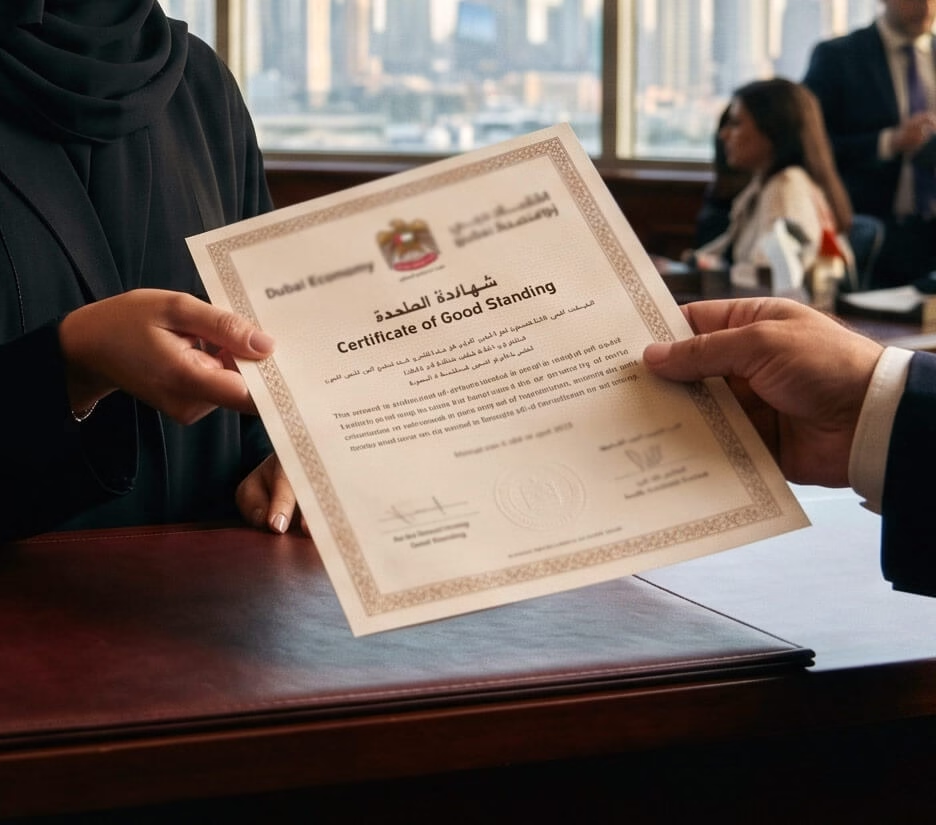
Table of Contents
TL;DR (Quick Summary)
- A Certificate of Good Standing proves your company is active and compliant with its licensing authority on the date of issue.
- It confirms: active licence, cleared fees, no administrative blocks, and completed required filings.
- It does NOT confirm VAT status, Corporate Tax compliance, financial health, or bank AML clearance.
- In 2026, it’s commonly required for banking reviews, vendor onboarding, tenders, cross-border deals, and restructuring.
- Mainland companies (DET) usually receive a Company Status or “To Whom It May Concern” letter, while free zones issue a formal Good Standing certificate.
- Always apply when your company file is clean — no renewals, amendments, or penalties pending.
- Certificates are time-sensitive in practice; most banks prefer recently issued copies.
- For international use, attestation or legalisation may be required.
A Certificate of Good Standing is one of those documents businesses rarely think about until a bank, partner, or regulator suddenly asks for it.
In Dubai, a Good Standing Certificate serves as official proof that your company is active, compliant, and free from administrative blocks at the time of issue.
In 2026, this certificate will play a growing role in banking, tax-related reviews, vendor onboarding, and cross-border transactions. While the process itself is not complicated, misunderstandings around what the certificate confirms and when to request it often cause delays.
This guide explains how the Certificate of Good Standing works in Dubai, how to obtain it correctly, and how to avoid common mistakes that slow businesses down.
What “Good Standing” Actually Means in Dubai
Good standing is an administrative status, not a business endorsement. A company is generally considered in good standing when:
- Its trade licence is active and valid.
- There are no administrative blocks, suspensions, or restrictions on the company file.
- Government fees and penalties linked to the licence are cleared.
- Mandatory regulatory filings required by the issuing authority are complete.
The certificate confirms the company’s status on a specific date. It does not guarantee future compliance and does not replace other regulatory confirmations.
What a Certificate of Good Standing Does Not Confirm
This is one of the most misunderstood areas, especially in 2026. Many businesses assume the certificate covers wider compliance obligations. It does not.
A Certificate of Good Standing does not confirm:
- VAT registration or VAT compliance status
- Corporate Tax registration, filings, or payments
- Audit completion or financial health
- AML, KYC, or sanctions clearance by banks
- Ongoing compliance after the issue date
Banks and counterparties often request additional documents. Understanding this early prevents incorrect submissions and delays.
Why the Certificate is Important in 2026
Regulatory scrutiny has increased across the UAE and internationally. As a result, simple proof of company existence is no longer enough. Third parties now expect formal confirmation from the issuing authority.
Banking and Compliance Reviews:
Banks regularly request updated proof of company status during account opening, periodic KYC refreshes, or when adding shareholders and signatories.
Vendor Onboarding and Corporate Procurement:
Large organisations rely on it to verify legitimacy before contracting or releasing payments.
Tenders and Government-Related Projects:
Tender documentation often includes a requirement for recent proof of active registration.
Cross-Border Transactions:
Overseas partners use it to confirm that a UAE company legally exists and operates without restrictions.
Group Restructuring and Governance:
Holding companies and family offices use it during restructuring, internal audits, and compliance reviews.
Certificate Types in Dubai
Dubai does not use one universal term for this document. The name depends on the licensing authority. The function is similar, but the wording matters.
Certificate of Good Standing
Commonly issued by free zones. It confirms that the company is registered and compliant with the issuing authority.
Company Status Letter or “To Whom It May Concern” letter
Typically issued to mainland companies licensed by the Dubai Economy and Tourism (DET).
Incumbency Certificate
Often requested alongside Good Standing. It lists authorised persons, such as shareholders, directors, managers, or signatories.
If a third party does not specify the document name, clarify whether they need proof of company activity or proof of authorised signatories. Ordering the wrong certificate is one of the most common delays.
Tax and Regulatory Context in 2026
Tax compliance now plays a practical role in document reviews. Even though the Certificate of Good Standing is not issued by the Federal Tax Authority, it is rarely reviewed in isolation.
By 2026:
- Banks often cross-check Corporate Tax registration separately.
- VAT registration status may be reviewed alongside licensing documents.
- Inconsistencies between tax and licensing records can trigger follow-ups.
The certificate alone does not resolve tax-related compliance. Businesses should ensure all registrations align before submission.
Step-by-Step Process for Mainland Companies (DET)
Mainland companies licensed by the Dubai Economy and Tourism follow a different route. The document is often issued as a status letter rather than a certificate titled “Good Standing.” The function remains the same.
What To Request
Most mainland companies apply for a “To Whom It May Concern” letter or a company status confirmation.
Application Process
- Access the DET eServices portal using authorised credentials.
- Select the service related to company letters or status confirmations.
- Review company details carefully before submission.
- State the purpose of the request if prompted.
- Pay the applicable government fee.
- Download the issued letter once approved.
If amendments or renewals are in progress, issuance may be delayed.
Step-by-Step Process for Dubai Free Zone Companies
Free Zones usually issue Certificates of Good Standing directly. The process is largely digital and varies slightly by authority. Most requests are handled through member portals.
Authorities using the AXS platform
Several Dubai free zones allow certificate requests through AXS. The process involves service selection, confirmation of details, and payment.
Dubai World Trade Centre Authority
DWTC entities request Good Standing or Incumbency Certificates via the authority portal under company services.
JAFZA Offshore Companies
Offshore entities request official company letters, including Good Standing certificates, through the Dubai Trade system.
DIFC Entities
DIFC companies request status confirmations through the Registrar of Companies, depending on the entity type.
Digital Verification and Document Authenticity
Document format and authenticity matter more than ever. Many authorities now issue digitally signed certificates. These are designed to prevent misuse.
Digitally issued certificates are often:
- Include official reference numbers.
- Allow online verification.
- Are rejected if altered or reformatted.
Always share the original digital file. Screenshots or edited PDFs are commonly rejected.
When Attestation or Legalization is Required
Certificates used outside the UAE may need additional processing. This depends on the destination country and receiving authority. Requirements vary widely.
- Attestation Chain: Some jurisdictions require notarisation and embassy legalisation.
- Certified Translation: Certain countries require legally certified translations.
Confirm requirements before ordering the certificate. This avoids repeat applications.
Group Structures and Multi-Entity Businesses
Group companies require special attention. One certificate does not cover multiple entities. Each company must be assessed separately.
Each UAE entity must obtain its own Certificate of Good Standing. Group charts and UBO disclosures are often reviewed alongside it.
This commonly applies to:
- Holding companies.
- Family offices.
- Regional headquarters with multiple licences.
When a Certificate of Good Standing isn’t Required
Timing plays a key role in approval. Submitting your request at the wrong stage can lead to rejection, something easily avoided with proper planning.
Avoid applying:
- During licence amendments or shareholder changes
- While the licence renewal is still in process
- If compliance filings are under review
- When fines or penalties are pending
Apply only when your company record is fully clear and up to date.
Validity Expectations and Timing
The Certificate of Good Standing doesn’t have a fixed expiry date, but third parties generally consider it time-sensitive, a standard industry practice.
Most banks and corporations prefer recently issued certificates, so it’s best to request yours shortly before you plan to submit it.
Industry – Specific Use Cases
Different industries rely on the Certificate of Good Standing for various purposes. Understanding these contexts helps anticipate additional requirements and minimize back-and-forth.
- Professional services firms: Used for client onboarding and compliance reviews
- Trading companies: Required for supplier approvals and logistics arrangements
- Tech and SaaS firms: Commonly needed for platform or payment gateway onboarding
- Consultancies: Often submitted for tenders and corporate contracting
In Conclusion
Getting a Certificate of Good Standing in Dubai is usually straightforward as long as the request is submitted to the right authority and the company file is clear. The real challenge lies not in the application itself, but in understanding what the certificate does and does not verify.
In 2026, companies that view this certificate as part of a broader compliance strategy tend to move faster, experience fewer banking delays, and avoid repeated document requests.
Ready to get your Certificate of Good Standing? Contact EZONE, one of the best business setup companies in Dubai, with your licensing details and recipient requirements. We’ll handle everything from there.
FAQs
Is a Certificate of Good Standing the same as a trade licence?
No. The trade licence is the permission to operate. The certificate is a status confirmation issued on a specific date.
Can a new company request it?
Usually, yes, as long as the company is fully registered, the licence is active, and there are no compliance holds.
Do mainland companies always receive a document called “Certificate of Good Standing”?
Not always. Mainland companies often receive a status letter or “To Whom It May Concern” letter instead.
Should I request it for every bank account application?
If the bank asks for it, yes. If they do not, you can wait. But having it ready can reduce delays.
FAQ’s
No. The trade licence is the permission to operate. The certificate is a status confirmation issued on a specific date.
Usually, yes, as long as the company is fully registered, the licence is active, and there are no compliance holds.
Not always. Mainland companies often receive a status letter or “To Whom It May Concern” letter instead.
If the bank asks for it, yes. If they do not, you can wait. But having it ready can reduce delays.

Karen Ursola is a Business Setup Advisor at EZONE, guiding founders through UAE company formation and licensing.